

Is fresh dog food worth it?Read the Lyka review
A PetReviews publication
IndependentNo paid placementWe earn nothing from links
How we score

Our scoring
methodology.

Every brand, product and retailer in our index is measured against the same transparent 100-point model. The same rules apply to everyone, there are no paid placements inside a score.

Reviewed by the Dog Food Reviews editorial team

Independent scoringUpdated August 2026Not veterinary advice

6Weighted pillars
100Points total
20Brands scored
$0Pay-to-rank
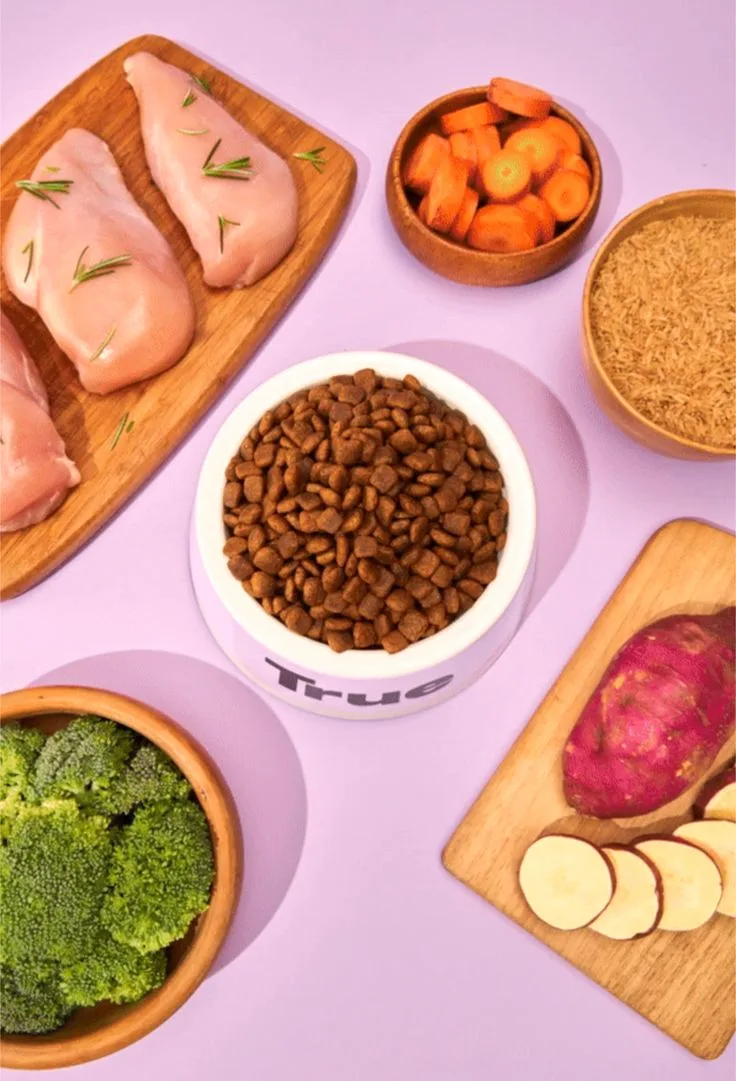
Raw chicken breast on a wooden board, sliced carrots, brown rice, broccoli and sweet potato arranged around a white bowl of dry kibble.
Licensed editorial photography

The 100-point model

Six weighted checks. One score.

Six areas are assessed, and the weights below set how much each one counts. Price and ingredient quality carry the most weight because they matter most to real-world value, and the softest evidence we hold carries the least.

100points

Share of the 100 points of weight, by pillar

Price & Value25% of the weight25 pts
Ingredient Quality25% of the weight25 pts
Nutrition & Suitability20% of the weight20 pts
Transparency15% of the weight15 pts
Availability & Convenience10% of the weight10 pts
Customer Sentiment5% of the weight5 pts
The six pillars of the Dog Food Reviews 100-point model and the weight each one carries.
PillarWeightDetail
Price & Value25 pts25% of the weight
Ingredient Quality25 pts25% of the weight
Nutrition & Suitability20 pts20% of the weight
Transparency15 pts15% of the weight
Availability & Convenience10 pts10% of the weight
Customer Sentiment5 pts5% of the weight
Total weight · 100 pts

Weights are fixed and published

Read the pillars and the overall correctly

Each pillar is published as its own reading out of 100, so a brand can be a 90 on ingredients and a 62 on availability on the same card. The weights above are what those six readings count for against each other, not points banked toward a running total.

The overall score is our assessment of the brand on the same 100-point scale. It is not a simple sum of the six rows, and multiplying the printed pillars by the weights will not reproduce it exactly. Where the two diverge, the six published readings are the workings and the overall is the judgement they support.

We would rather print that than let an arithmetic you cannot reproduce sit under a page called transparent. If a pillar reading looks wrong to you, that is a correction we want, and the process for it is further down this page.

Pillar by pillar

Exactly what we look at, and what we cannot see.

Every pillar below lists the checks inside it, the evidence it is read from, and the thing it is not able to tell you. The last line is the one most scoring models leave out.

A hand holding a terracotta bowl of dry kibble against a yellow wall, with the shadow of a dog cast below it.
Fig. 1Every reading in this section comes off a label, a retailer listing or a manufacturer disclosure. None of it comes off the food in the bowl.

Licensed editorial photography

Pillar 01

Price & Value

25/ 100 pts

What we read

  • Price per kg
  • Estimated cost per day
  • Subscription discount
  • Sale frequency
  • Value against similar formulas

How it is assessed

Prices are read from Australian retailer listings and the brand’s own store at the time of scoring, then converted into one comparable pair of figures: cost per kilogram, and estimated cost per day for an average adult dog. It carries the heaviest weight in the model because real feeding cost is what matters most to owners, and because the shelf price on a bag tells you almost nothing until you divide it by the weight.

What it cannot tell you

Prices move. Every figure we publish is an editorial estimate for the day it was entered by hand, not a live feed, so check the current price with the retailer before you buy.
Pillar 02

Ingredient Quality

25/ 100 pts

What we read

  • Named meat first
  • Protein source quality
  • Wholefoods
  • Fillers
  • Artificial colours and flavours
  • Grain quality

How it is assessed

Read from the published ingredient panel on the pack or the product page: whether a named meat leads the list, what the protein actually is, how much of the formula is filler, and whether artificial colours, flavours or preservatives appear. Panel integrity counts as well as content, because a list written to be hard to compare is a choice the brand made.

What it cannot tell you

We read the label, we do not test the food. Nothing in this pillar verifies what is in the bag, only what the brand has printed about it.

Pillar 03

Nutrition & Suitability

20/ 100 pts

What we read

  • Complete and balanced claim
  • Life-stage suitability
  • Protein level
  • Fat level
  • Sensitive-stomach positioning
  • Veterinary-diet positioning

How it is assessed

Read from the published nutritional analysis and the life-stage claim: whether the formula states complete and balanced to AAFCO or an equivalent standard for the life stage on the pack, and how the protein and fat levels sit against the rest of the category.

What it cannot tell you

A complete and balanced statement is a label claim we read, not a result we verify. We do not commission nutritional analysis, and nothing in this pillar is veterinary advice.

Pillar 04

Transparency

15/ 100 pts

What we read

  • Clear ingredient list
  • Country of manufacture
  • Ownership
  • Feeding-guide clarity
  • Recall visibility

How it is assessed

Read from what the manufacturer itself puts in public: who owns the brand, where the food is made, how clearly the feeding guide is written, and how easy recall history is to find. Where we reference recalls we rely on publicly available ACCC data, manufacturer announcements and Australian Veterinary Association communications.

What it cannot tell you

We can only score what a brand publishes. A brand that discloses little scores lower here, and that is a statement about the disclosure, not about the food.

Pillar 05

Availability & Convenience

10/ 100 pts

What we read

  • Stock availability
  • Delivery options
  • Repeat delivery
  • Retailer availability

How it is assessed

Read from Australian retailer listings and the brand’s own delivery terms: how many stockists carry the range, how widely it ships, and whether repeat delivery is offered without a lock-in.

What it cannot tell you

Stock is a snapshot of what was listed on the day we checked. A subscription-only brand scores lower here because the food is harder to get at short notice, not because the food is worse.

Pillar 06

Customer Sentiment

5/ 100 pts

What we read

  • Review sentiment
  • Repeat complaints
  • Product consistency feedback

How it is assessed

Aggregated from publicly posted feedback by Australian dog owners, weighted towards long-term feeding outcomes rather than a single delivery going wrong.

What it cannot tell you

The lightest pillar in the model, at five points, because published reviews are the softest evidence we hold. Sentiment can nudge a score. It can never decide one.

Plain English

The rating bands.

We translate each score into a plain-English band. Low scores always read as poor value or “compare carefully”, never as unsafe. The right-hand column counts how many of the 20 brands we have scored are standing on each rung today.

Score bandIn the index
90-100Excellent
0brands in the index

Category-leading on value, ingredients and transparency.

80-89Strong
5brands in the index

A confident recommendation with only minor trade-offs.

70-79Good
5brands in the index

Solid all-rounder; check it against higher-scoring rivals.

60-69Average
5brands in the index

Workable, but better value usually exists nearby.

50-59Poor value
2brands in the index

Lower-scoring for the price, compare carefully.

Under 50Compare carefully
3brands in the index

Weak on value or transparency; weigh alternatives first.

The top rung is empty

Nothing in the index reaches 90 today. The band stays published because the model can award it, not because anything has, and an empty rung is a more useful thing to show you than a brand rounded up onto it.

The model, applied

Where all 20 brands actually land.

A scoring model is only worth reading if it separates things. Here is every published overall score in the index on the model’s own 0 to 100 scale: one tick per brand, the middle half of the index shaded, and the median ruled.

Published overall scores

The spread of the index

Each tick is one brand’s published overall score out of 100. The shaded band is the middle half of the index, from the lower quartile to the upper quartile.

Min
44
Q1
58.5
Median
69.5
Q3
78.8
Max
87
Published overall score out of 100 for each of the 20 brands in the Dog Food Reviews index.
BrandOverall score
Black & Gold44
Baxter's46
Julius48
Woofin' Good!50
ProBalance54
Leaps & Bounds60
The Nosh Project62
Providore64
Hill's Science Diet66
Royal Canin68
Ivory Coat71
Meals for Mutts74
SavourLife75
Black Hawk76
Prime10078
ZIWI Peak81
Petzyo83
Frontier Pets84
Scratch86
Lyka87
Middle half of the rangeMedian20 brands scored

Editorial estimates · August 2026

Honest limits

What the score does, and doesn't, say.

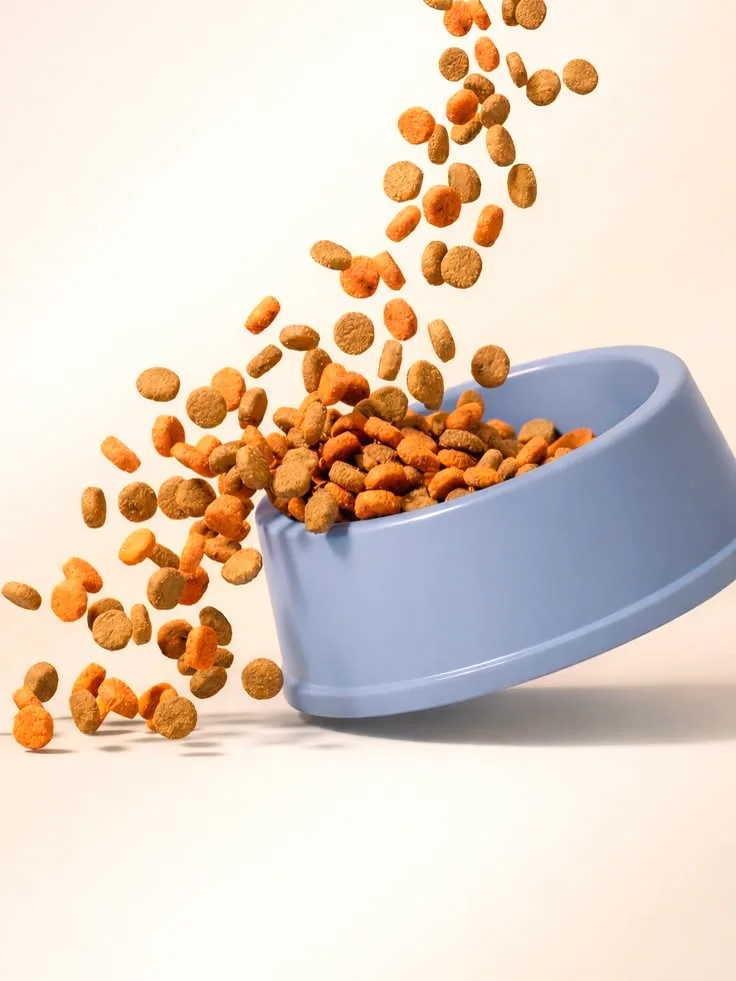
Dry kibble pouring into a pale blue ceramic bowl tipped on its side, against a warm cream background.
Fig. 2What a v1 score measures is everything printed around the bowl: the panel, the price, the pack size and the disclosure. It does not measure what is in it.

Licensed editorial photography

What we do claim

  • Real cost per kg and per day, not the shelf price.
  • Ingredient quality read from the published list, named meat, fillers, additives.
  • Transparency: country of manufacture, ownership and recall visibility.
  • A consistent, comparable score using the same six checks every time.

What we don't claim

  • We never call a product unsafe, harmful or dangerous.
  • We don’t run laboratory testing or chemical analysis.
  • We don’t give veterinary, medical or individual nutrition advice.
  • We don’t sell rankings, no placement inside a score can be bought.

We read the label. We do not test the food.

Dog Food Reviews editorial team

Why v1 scores are published as editorial estimates

When we get it wrong

The corrections process.

A published model has to survive being checked. This is what happens when a reader or a brand tells us a figure, a fact or a score on this site is wrong.

Step 01

You tell us what is wrong.

Email the page URL, the specific claim you believe is incorrect, and the evidence for it. Readers and brands use the same address and get the same process.

Step 02

We review it within 10 business days.

Every report is checked back against the source we scored from. Corrections are addressed on editorial merit, not on the basis of commercial pressure.

Step 03

If it is material, the page changes.

A material correction is published, marked on the page and dated, and the score itself is recalculated where the corrected information affects scoring.

If a correction is material, all four happen

  • Update the page with corrected information.
  • Add a visible correction note at the top of the affected review or article.
  • Update the page’s last-modified date.
  • Recalculate the score if the corrected information affects scoring.

Scores are re-checked without being asked

A brand goes back through the model whenever we are alerted to a material change, and the whole index is audited once a year.

  • A recipe reformulation
  • A recall
  • A significant price shift
  • Updated manufacturer disclosure

Index reviewed

Annual audit each June

Where we stand

Independence, in writing.

Independence statement

Our rankings are based only on this published methodology. We currently earn nothing from links on this site; if we join an affiliate program in future, affected pages will disclose it and commissions will never change a score or a ranking. Sponsored placements, where they appear, are clearly labelled and sit outside the scoring model.

Retailer-owned brands

Where a brand is retailer-owned, exclusive or heavily house-promoted and that relationship is verifiable, we label it clearly. These brands can still score well, but their transparency score reflects the harder like-for-like comparison. The same fair, consistent logic applies to every major retailer, including Petbarn: we simply show price per kg and cost per day across stores so you can find the best value at any of them.

Not veterinary advice

Dog Food Reviews is a value and comparison resource, not veterinary advice. v1 scores are based on publicly available product information and pricing, not laboratory testing. Prices are illustrative and change frequently. Always speak to your vet before changing your dog’s diet.

Good to know

Methodology, answered.

No. v1 scores are based on publicly available product information, retailer pricing and our published methodology, not laboratory analysis. We never claim a product is unsafe; low scores reflect poorer value, lower ingredient quality or weaker transparency, not safety.

Reviewed by the Dog Food Reviews editorial team

Independent scoringUpdated August 2026Not veterinary advice

Where the model lands

The same model, pointed at your own dog.

Tell the finder what matters most to you and it orders every complete dog food we score on that published pillar, then shows the pillar scores behind the top match. Nothing in that order is bought.

Try the Dog Food Finder