
Switching your dog to a new food
A lot of the work in changing a dog's food is logistics rather than nutrition: how much of the old bag is left, when the new one arrives, and what to do when those two dates do not meet. This guide covers the mechanics.
Reviewed by Lucinda Woodford
Contributing reviewer, practical feeding and owner experienceIndependent scoringUpdated August 2026Not veterinary advice
Nutrition and health claims on this page, meaning the signs that mean stopping the changeover and speaking to a vet and the note on prescription and veterinary diets, are reviewed by Dr Chris Wolmarans BVSc.
General information, and not veterinary advice. A changeover is a feeding decision; anything about your dog's health is a question for your vet.
The approach on the pack
Why the changeover is usually gradual
Two reasons to go slowly, and only one of them is about the dog.
Introducing a new food over several days, rather than all at once, is the approach manufacturers' own transition instructions generally ask for, and those instructions are printed on the pack or published on the brand's site. The reason packs give for it is to let a dog that has been eating the same thing for months settle onto the new food gradually; why that is so, and whether it applies to a particular dog, is a question for a vet rather than for this guide.
There is a second, practical reason to go slowly: it makes the new food readable. If the bowl changes overnight and something about that week seems off, there is no way to separate the food from a new treat, a different chew or something picked up on a walk. Holding everything else steady through the changeover, treats included, keeps the variables down to one.
What is actually in the two foods is worth understanding before you start, and why ingredients matter sets out how to read a panel.
“Change one thing at a time, and the bowl is the thing you changed.”
The mechanics
What a week of mixing usually looks like
The pattern brands generally set out is proportional rather than additive. The total going into the bowl does not increase; only the split inside it changes.
The split in the bowl
What it asks of you
- Mostly the old foodA small share of the new food goes in, and everything else about the day stays where it was.
- Near an even splitBoth foods measured separately, then combined, because two foods rarely feed at the same rate.
- Mostly the new foodThe old bag is now the smaller half, which is where running out starts to matter.
- New food aloneThe bowl is one food again, and the amount in it has not increased at any point.
Measure both foods rather than judging by eye, because two foods rarely feed at the same rate. A cup of a dense premium kibble sold in an 8kg bag is not the same serving as a cup from an 18kg supermarket bag, and fresh bowls are portioned by weight. Each brand's own feeding guide is the reference for its share of the bowl, so check both packs, and weigh rather than scoop if the scales are already on the bench.
Some dogs move through the steps quickly and others need longer, and how fast to go for a dog with a history of digestive upset is a question for a vet rather than for a chart. Going back a step and holding there is an ordinary adjustment rather than a failure, and how long to hold is a question for the pack's own instructions or for a vet. The right pace for an individual dog, particularly a puppy, a senior or a dog with an existing condition, is something to settle with a vet rather than from a general guide.
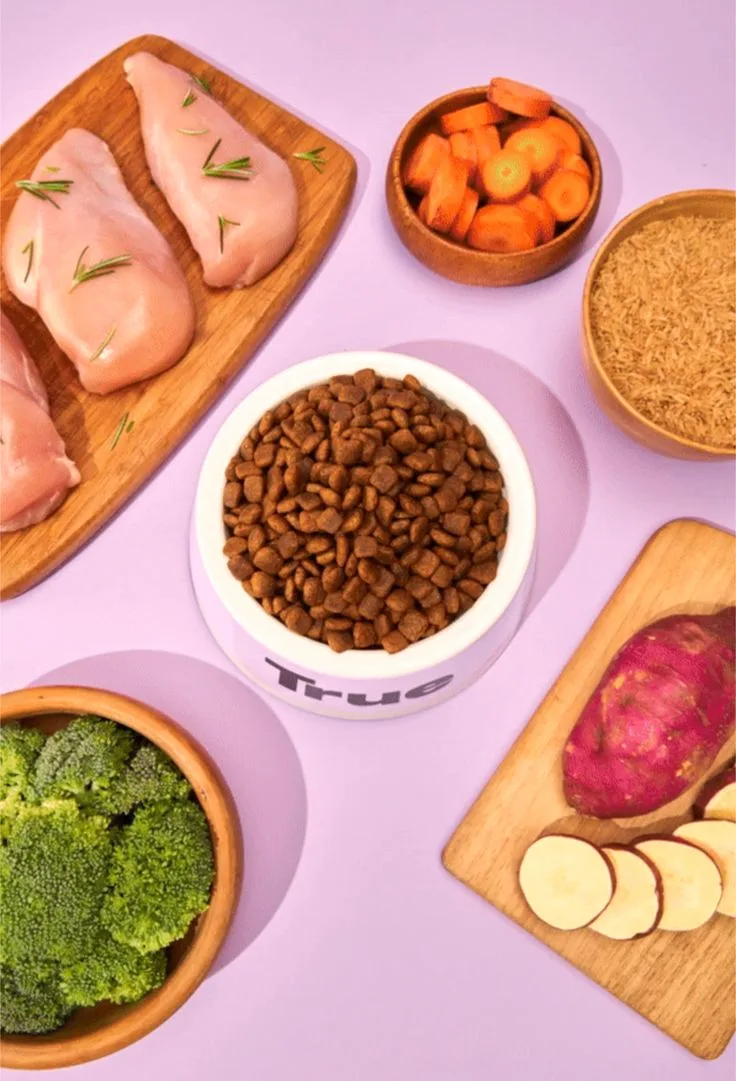
Photography licensed for editorial use
Before you start
Plan the switch before the old bag runs out
One thing that quietly derails a transition is arithmetic.
Dry bags in this site's index run from 8kg up to 20kg, and a mixing week needs enough of the old food left to cover every step. Working out roughly how many days remain in the current bag, then starting the changeover while there is still a comfortable margin, is what prevents the forced overnight swap that the gradual approach exists to avoid.
This also means the last scoop is the wrong moment to start choosing. Deciding on the next food while the current bag still has depth leaves room to compare cost per kilogram, delivery windows and pack sizes without pressure.
Where to compare before you commit
- The dog food price indexCost per kilogram and cost per day, on our editorial estimates.
- Best dog food in AustraliaThe full ranked index, scored on one published model.
- The dog food finderNarrows the field by dog rather than by brand.
- Black Hawk reviewA brand page lists the formats and pack sizes each brand sells.
Delivery dates
When the subscription cycle does not line up
A box arrives on the plan's schedule, which has no knowledge of when the old bag will run down.
Repeat delivery and autoship run across the specialist retailers in our index, Petbarn, Pet Circle, Petstock, Budget Pet Products, PETO and Habitat among them, and several brands sell that way only. Scratch and Lyka are direct subscription, and Petzyo is mostly direct or through Petstock.
Two levers usually fix a clash. Bringing the first delivery of the new food forward, or pushing the final order of the old food back, is normally a date setting inside the account, and most plans allow an order to be moved or skipped. Failing that, a small bag of the old food bridges the gap.
Coles, Woolworths, Aldi and IGA run no pet subscription at all, and their aisles are dominated by their own house brands, so a supermarket is only a bridge if the dog happens to be on one of the few national lines they carry. A specialist pet retailer is the more reliable place to find the same bag for a few days.
The two dates to line up
- The day the old bag runs out
- Set by how much is left and how much goes in the bowl each day.
- The day the new food lands
- Set by the plan, and movable inside the account on most of them.
The mixing week sits between those two dates, which is why it is worth putting them in the same place before the changeover starts.
Format by format
Formats change the mechanics
Dry to dry is the simplest case: two kinds of biscuit, one bowl, one changing ratio. Everything else adds handling.
Rolls
Prime100’s SLR single-protein roll is a 2kg format in our index, which records the size and the price rather than how the roll is stored, so read the storage directions printed on the roll before you plan around it.
Air-dried
ZIWI Peak and Frontier Pets are both 1kg air-dried packs in our index, and our index describes Frontier Pets as a complete diet that sits in the pantry rather than the freezer. For any air-dried pack, the directions printed on it are the ones to follow.
Chilled and frozen foods carry their own storage and handling instructions on the pack, so follow those and clear an uneaten bowl rather than leaving it down. Fresh versus kibble goes through the trade-offs between the formats in more detail, and storing fresh dog food covers the freezer side of it.
Where this guide stops
When to stop and call a vet
A changeover is a feeding decision, not a health one, and the line between the two is worth respecting.
Stop the transition and speak to a vet
- Refusing meals
- Repeated vomiting
- Blood
- Lethargy
- Any digestive upset that persists or worsens rather than settling
The same applies to very young, elderly, pregnant or unwell dogs, and to any dog whose reaction to a food change concerns the person feeding it.
Prescription and veterinary diets
Anything involving a prescription or veterinary diet, the Royal Canin Gastrointestinal line in our index being one example, should be changed only on veterinary direction. A vet has the dog's history and can examine the animal, which no published guide can do.
The health-related content on this page has been reviewed by our veterinary reviewer, Dr Chris Wolmarans BVSc. The rest of it describes the general mechanics of changing foods. It is not veterinary advice, and it is not a substitute for asking a vet about your own dog.
Switching food FAQs
4 questions
Brands generally publish their own transition instructions on the pack or on their site, commonly stepping from mostly old food to mostly new over several days rather than switching overnight. The pack in front of you is the schedule to follow, and the right pace for an individual dog is a question for a vet rather than a chart.
Sourcing a small bag of the same food to finish the changeover is the simplest fix, and a specialist pet retailer is the more reliable place to find it, because the supermarket aisles in this site's index are dominated by their own house brands. If it cannot be found, move to the new food and watch the dog closely, and contact a vet if anything concerns you.
Each brand's own transition instructions are still the place to start. The practical difference is handling rather than pace: Lyka bowls and Petzyo's raw patties both arrive frozen and portioned, so thawing, freezer space and bowl hygiene need planning into the mixing days alongside the ratio itself.
Keeping treats and chews the same through the changeover is the more useful approach, because it leaves the food as the only thing that has changed. If a reaction does appear, that makes it far easier to work out what is behind it before raising it with a vet.
Who wrote this
This guide is by Lucinda Woodford, a contributing reviewer on practical feeding and owner experience. She is a dog walker, so she spends a very large amount of time with dogs of different ages, energy levels, temperaments and routines, and she reads ingredient panels and compares brands on what an owner is actually getting for the money. She holds no veterinary or nutrition qualification. It is general information and it is not veterinary advice.